
Disembodiment leads to suffering and dis-ease
Blog post description.
6/18/20264 min read

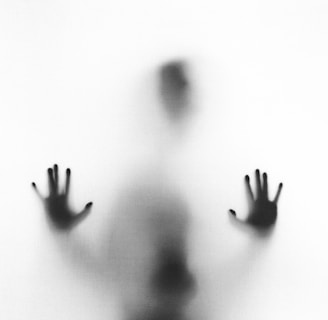
Disembodiment Leads to Suffering and Dis-ease
"The body is not a vehicle we merely drive through life. It is the very ground of our experience."
In modern life, we have become extraordinarily skilled at living from the neck up.
Our culture rewards intellect, productivity, analysis, and achievement. We spend countless hours in front of screens, immersed in information, managing calendars, solving problems, and planning for futures that have not yet arrived. While these capacities are valuable, many of us have unknowingly paid a price for privileging the mind above all else.
That price is disembodiment.
Disembodiment occurs when we become disconnected from the felt experience of being alive in our bodies. We stop noticing sensations, emotions, tensions, intuitions, and signals arising from within. Instead, we inhabit concepts, narratives, and mental abstractions.
The consequences are profound. Increasingly, contemporary research suggests that many forms of psychological suffering—and perhaps even aspects of physical illness—are linked to a chronic state of disconnection from the body.
In a very real sense, disembodiment leads to suffering and dis-ease.
The Great Separation
Western culture has long inherited the idea that the mind and body are separate entities. Philosophers such as René Descartes famously proposed a distinction between the thinking mind and the physical body, an idea that has shaped medicine, education, and psychology for centuries.
Yet modern neuroscience paints a very different picture.
Rather than existing as separate systems, the brain, nervous system, immune system, endocrine system, emotions, and bodily sensations function as an integrated whole. Thoughts influence physiology. Physiology influences thoughts. The body is not simply responding to the mind; it is actively participating in perception, memory, decision-making, and emotional regulation.
In recent decades, researchers in fields such as interpersonal neurobiology, affective neuroscience, and somatic psychology have increasingly highlighted the role of embodiment in mental and physical wellbeing.
The emerging message is clear: we do not merely have bodies—we are bodies.
Trauma Lives in the Body
Perhaps no book has done more to popularise this understanding than Bessel van der Kolk's bestselling work, The Body Keeps the Score.
Drawing upon decades of clinical research with trauma survivors, van der Kolk demonstrates how overwhelming experiences can become embedded within the nervous system. Even when a traumatic event is no longer occurring, the body may continue responding as if danger remains present.
The heart rate changes.
Breathing patterns shift.
Muscles remain tense.
Stress hormones continue circulating.
The body remembers what the conscious mind may struggle to articulate.
This helps explain why individuals often say things like:
"I know I'm safe, but I don't feel safe."
The thinking mind may understand the situation, yet the nervous system has not received the message.
Healing, therefore, requires more than intellectual insight. It requires restoring communication with the body itself.
The Cost of Ignoring Bodily Wisdom
Most people can recognise obvious physical symptoms such as pain or fatigue. Yet the body communicates in far subtler ways.
A tightening in the chest.
A knot in the stomach.
A lump in the throat.
A sense of heaviness.
An unexplained feeling of contraction.
These sensations often arise before conscious understanding. They are forms of embodied intelligence.
When repeatedly ignored, however, the body tends to increase the volume.
What begins as mild tension may evolve into chronic stress.
What starts as emotional discomfort may eventually become anxiety, burnout, insomnia, digestive issues, or persistent exhaustion.
This does not mean all illness is caused by psychological factors. Such claims oversimplify the complexity of health and disease. However, an expanding body of evidence in psychoneuroimmunology demonstrates that chronic stress and nervous system dysregulation significantly influence inflammation, immune functioning, cardiovascular health, and overall wellbeing.
The body and mind are not separate conversations. They are the same conversation occurring through different channels.
Living in Survival Mode
One of the defining characteristics of disembodiment is living in a chronic state of activation.
The nervous system becomes organised around doing rather than being.
Achievement rather than connection.
Control rather than presence.
Many people spend years functioning in what researchers describe as sympathetic nervous system dominance—commonly known as the fight-or-flight response.
In this state, the body prepares for danger.
Heart rate increases.
Attention narrows.
Muscles tighten.
Digestion slows.
Restoration is postponed.
The tragedy is that modern stressors are often psychological rather than physical. Emails, deadlines, social media comparisons, financial worries, and relentless busyness can trigger the same physiological responses that once evolved to help us survive predators.
The body cannot always distinguish between an approaching lion and an approaching inbox.
Without periods of restoration and regulation, survival mode gradually becomes a way of life.
Presence as Medicine
If disembodiment contributes to suffering, then embodiment becomes a pathway toward healing.
Embodiment is not a technique. It is a relationship.
It is the practice of returning attention to direct experience.
Noticing the breath.
Feeling the contact of feet against the ground.
Sensing tension and relaxation.
Listening to emotions as they arise in the body.
Cultivating awareness without immediately trying to fix, suppress, or analyse.
Research on mindfulness, yoga, breathwork, somatic therapies, and contemplative practices consistently demonstrates improvements in stress regulation, emotional resilience, and overall wellbeing. Many of these approaches work not because they change our thoughts first, but because they restore communication between awareness and the body.
In essence, they help us come home.
The Wisdom Beneath the Noise
Many of us have been taught to mistrust the body.
We are encouraged to override exhaustion, suppress emotion, ignore intuition, and push through discomfort in pursuit of productivity.
Yet the body is not our enemy.
It is not a machine requiring constant management.
Nor is it simply a container for the mind.
The body is continuously gathering information, regulating experience, and guiding us toward balance.
When we learn to listen, we often discover that beneath anxiety lies fear, beneath anger lies hurt, beneath exhaustion lies unmet need, and beneath striving lies a longing for connection.
Embodiment invites us to meet these realities with curiosity rather than judgment.
Returning Home
The epidemic of modern suffering may not simply be a crisis of mental health.
It may also be a crisis of disconnection.
Disconnected from nature.
Disconnected from community.
Disconnected from meaning.
And perhaps most fundamentally, disconnected from our own bodies.
The invitation is not complicated, though it is often challenging.
Pause.
Breathe.
Notice.
Feel.
Return.
Again and again.
Because healing does not always begin with changing who we are.
Sometimes it begins with remembering where we are.
And where we are is here, in this living, breathing body—the place we have never truly left, but too often forgotten.
Stay Connected
be part of the collective